Research is an integral part of every small and big business.
It is important for an organization to look into new areas and find new ways to
expand their business. Research can be defined as a systematic approach to
study new fields, new material, or to look for new dimensions in an existing
field.
What is the Research method?
The research
method consists of all the techniques and method which are employed by a
researcher in a research process to find the solution to the research problem.
The sole purpose of research methods is to find the solution. Research methods
can be of two types qualitative research methods and quantitative research methods.
Qualitative research methods
The
qualitative research method consists of open-ended and conversational research
methods. The qualitative research method is used to collect in-depth and
detailed data about the research topic.
Qualitative
research methods are designed in such a way that reveals about the behavior and
perception of people under research.
Data collected
from qualitative research methods are descriptive. Therefore, it is easy to
draw inferences from it. Qualitative research methods are widely used in the
social and behavioral sciences.
Methods like a
focus group, one-on-one interviews, case study research, ethnographic research, observation research, and
record-keeping are the various methods used in qualitative research. Click here
to learn about the different methods used in qualitative research in detail.
Quantitative research methods
Quantitative
research methods are those methods where a systematic approach is used to
collect quantifiable of data by performing computational, mathematical, or
statistical techniques. The data collected through quantitative research
methods are usually in numerical form.
The proper
outcome can be deduced by analyzing the data in a systematic form. The results
obtained through quantitative research methods are statistical, logical, and
unbiased.
These research methods are applied to a group of the population, which represents the entire population. Key Differences between Research Method and Research Methodology
Research Method
• Research methods are the methods used
by researchers to collect data to conduct research on a particular research
topic.
• The objective of the research method
is to find the solution.
• Research methods are useful to apply
during the latter stage of the research process.
• Research methods are small part of
research methodology.
• Research methods consist of various
techniques where various studies and experiments are used to conduct research
and reach an appropriate conclusion.
• Research methods consist of different
investigation techniques.
• Research method encompasses of carrying out an experiment, survey, test and so on.
Research Methodology
• A Research methodology is systematic
approach to solve the research problem and to reach a new conclusion.
• The objective of the research
methodology is to determine the solution by applying correct procedures of
research.
• Research methodologies are applied in
the initial stage of the research being conducted.
• A Research methodology is a
multi-dimensional concept.
• Research methodologies are used
applied during the initial stage of the research to explain the purpose of
chosen methods and how they will serve its function.
• Research methodologies is a systematic
strategy to achieve the decided objective.
• Research methodology encompasses
different techniques which are used during the performance of the experiment,
surveys, and test, etc.
A
thesis statement can be the thing that makes or breaks your research paper.
This lesson will give you some examples of good thesis statements as well as an
explanation of how they work in the context of a paper.
What is a thesis
statement?
Every paper you write should have a main point, a main idea, or central message. The argument(s) you make in your paper should reflect this main idea. The sentence that captures your position on this main idea is what we call a thesis statement.
How long does it need
to be?
A
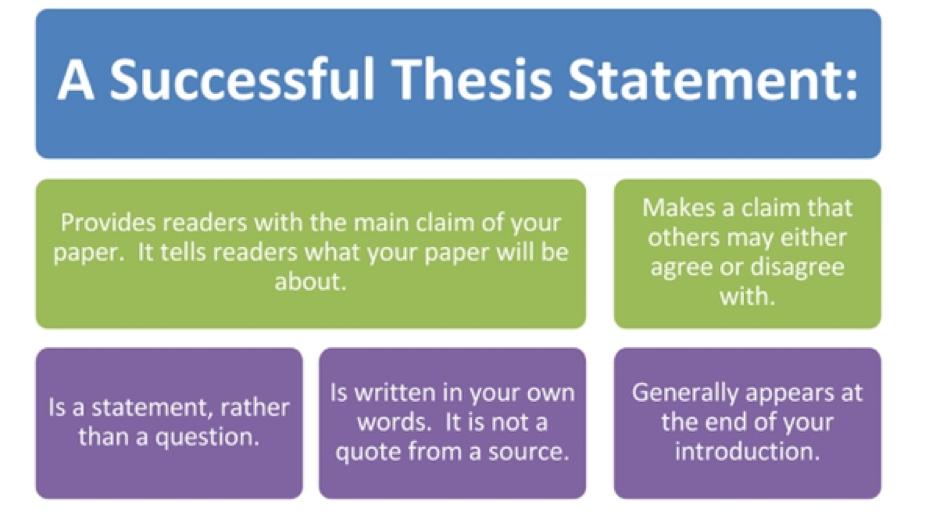
thesis statement focuses your ideas into one or two sentences. It should
present the topic of your paper and also make a comment about your position in
relation to the topic. Your thesis statement should tell your reader what the
paper is about and also help guide your writing and keep your argument
focused.
Questions to Ask When
Formulating Your Thesis
Where is your thesis
statement?
You
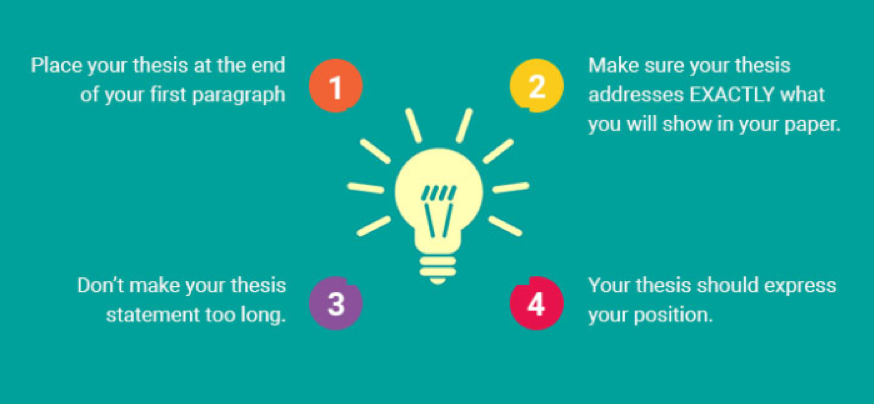
should provide a thesis early in your essay — in the introduction, or in
longer essays in the second paragraph — in order to establish your position
and give your reader a sense of direction.
Tip: In order to write a
successful thesis statement:
Avoid burying a great thesis statement in the middle of a
paragraph or late in the paper.
Be as clear and as specific as possible; avoid vague words.
Indicate the point of your paper but avoid sentence structures
like, “The point of my paper is…”
Is your thesis
statement specific?
Your thesis
statement should be as clear and specific as possible. Normally you will
continue to refine your thesis as you revise your argument(s), so your thesis
will evolve and gain definition as you obtain a better sense of where your
argument is taking you.
Tip: Check your thesis:
Are there two large statements connected loosely by a coordinating
conjunction (i.e. “and,” “but,” “or,”
“for,” “nor,” “so,” “yet”)?
Would a subordinating conjunction help (i.e. “through,”
“although,” “because,” “since”) to signal a
relationship between the two sentences?
Or do the two statements imply a fuzzy unfocused thesis?
If so, settle on one single focus and then proceed with further
development.
Is your thesis
statement too general?
Your
thesis should be limited to what can be accomplished in the specified number of
pages. Shape your topic so that you can get straight to the “meat” of
it. Being specific in your paper will be much more successful than writing
about general things that do not say much. Don’t settle for three pages of just
skimming the surface.
The
opposite of a focused, narrow, crisp thesis is a broad, sprawling, superficial
thesis. Compare this original thesis (too general) with three possible
revisions (more focused, each presenting a different approach to the same
topic):
Original thesis:
There are serious objections to today’s horror movies.
Revised theses:
Because modern cinematic techniques have allowed filmmakers to get
more graphic, horror flicks have desensitized young American viewers to violence.
The pornographic violence in “bloodbath” slasher movies
degrades both men and women.
Today’s slasher movies fail to deliver the emotional catharsis
that 1930s horror films did.
Is your thesis
statement clear?
Your
thesis statement is no exception to your writing: it needs to be as clear as
possible. By being as clear as possible in your thesis statement, you will make
sure that your reader understands exactly what you mean.
Tip: In order to be as clear
as possible in your writing:
Unless you’re writing a technical report, avoid technical
language. Always avoid jargon, unless you are confident your audience will be
familiar with it.
Avoid vague words such as “interesting,”
“negative,” “exciting,” “unusual,” and
“difficult.”
Avoid abstract words such as “society,” “values,” or
“culture.”
These
words tell the reader next to nothing if you do not carefully explain what you
mean by them. Never assume that the meaning of a sentence is obvious. Check to
see if you need to define your terms (”socialism,” “conventional,”
“commercialism,” “society”), and then decide on the most
appropriate place to do so. Do not assume, for example, that you have the same
understanding of what “society” means as your reader. To avoid misunderstandings,
be as specific as possible.
Compare
the original thesis (not specific and clear enough) with the revised version
(much more specific and clear):
Original thesis: Although the timber wolf
is a timid and gentle animal, it is being systematically exterminated. [if it’s
so timid and gentle — why is it being exterminated?]
Revised thesis: Although the timber wolf
is actually a timid and gentle animal, it is being systematically exterminated
because people wrongfully believe it to be a fierce and cold-blooded killer.
Does your thesis
include a comment about your position on the issue at hand?
The
thesis statement should do more than merely announce the topic; it must reveal
what position you will take in relation to that topic, how you plan to
analyze/evaluate the subject or the issue. In short, instead of merely stating
a general fact or resorting to a simplistic pro/con statement, you must decide
what it is you have to say.
Tips:
Avoid merely announcing the topic; your original and specific
“angle” should be clear. In this way you will tell your reader why
your take on the issue matters.
Original thesis: In this paper, I will
discuss the relationship between fairy tales and early childhood.
Revised thesis: Not just empty stories
for kids, fairy tales shed light on the psychology of young children.
Avoid making universal or pro/con judgments that oversimplify
complex issues.
Original thesis: We must save the whales.
Revised thesis: Because our planet’s
health may depend upon biological diversity, we should save the whales.
When you make a (subjective) judgment call, specify and justify
your reasoning. “Just because” is not a good reason for an argument.
Original thesis: Socialism is the best
form of government for Kenya.
Revised thesis: If the government takes
over industry in Kenya, the industry will become more efficient.
Avoid merely reporting a fact. Say more than what is already
proven fact. Go further with your ideas. Otherwise… why would your point
matter?
Original thesis: Hoover’s administration
was rocked by scandal.
Revised thesis: The many scandals of
Hoover’s administration revealed basic problems with the Republican Party’s
nominating process.
Do not expect to come up with a fully formulated thesis statement before you have finished writing the paper. The thesis will inevitably change as you revise and develop your ideas—and that is ok! Start with a tentative thesis and revise as your paper develops.
Is your thesis
statement original?
Avoid,
avoid, and avoid generic arguments and formula statements. They work well to
get a rough draft started, but will easily bore a reader. Keep revising until
the thesis reflects your real ideas.
Tip: The point you make in the
paper should matter:
Be prepared to answer “So what?” about your thesis statement.
Be prepared to explain why the point you are making is worthy of a
paper. Why should the reader read it?
Compare
the following:
Original thesis:
There are advantages and disadvantages to using statistics. (a
fill-in-the-blank formula)
Revised theses:
Careful manipulation of data allows a researcher to use statistics
to support any claim she desires.
In order to ensure accurate reporting, journalists must understand
the real significance of the statistics they report.
Because advertisers consciously and unconsciously manipulate data,
every consumer should learn how to evaluate statistical claims.
Avoid
formula and generic words. Search for concrete subjects and active verbs,
revising as many “to be” verbs as possible. A few suggestions below
show how specific word choice sharpens and clarifies your meaning.
Original: “Society is…” [Who is
this “society” and what exactly is it doing?]
Revised: “Men and women will
learn how to…,” “writers can generate…,” “television
addicts may chip away at…,” “American educators must
decide…,” “taxpayers and legislators alike can help fix…”
Original: “the media”
Revised: “the new breed of
television reporters,” “advertisers,” “hard-hitting print
journalists,” “horror flicks,” “TV movies of the
week,” “sitcoms,” “national public radio,” “Top
40 bop-til-you-drop…”
Original: “is, are, was, to
be” or “to do, to make”
Revised: any great action verb you
can concoct: “to generate,” “to demolish,” “to
batter,” “to revolt,” “to discover,” “to
flip,” “to signify,” “to endure…”
Use
your own words in thesis statements; avoid quoting. Crafting an original,
insightful, and memorable thesis makes a distinct impression on a reader. You
will lose credibility as a writer if you become only a mouthpiece or a copyist;
you will gain credibility by grabbing the reader with your own ideas and words.
A
well-crafted thesis statement reflects well-crafted ideas. It signals a writer
who has intelligence, commitment, and enthusiasm.
For
grad students, the most important proposal in the world is the thesis proposal.
The thesis proposal is an outline of the research work you plan to do in your
thesis or dissertation. It’s a roadmap — on which your academic and
professional career depends. As with any other type of proposal, the more
careful the planning, the better the results you’ll get from your thesis
proposal.
Once you have decided on a topic — which is admittedly the hardest part of the whole process, though not our focus here – the fun of putting together the thesis proposal itself begins. After that hurdle is overcome, writing the proposal is challenging. As we said, a thesis proposal is a summary that details an outline of your work. It identifies a problem that you’re researching, clearly states all the questions that will be researched as well as describes the resources and materials you need. Here are 8 tips that can help you, from getting started to finishing the entire proposal.
1. Budget
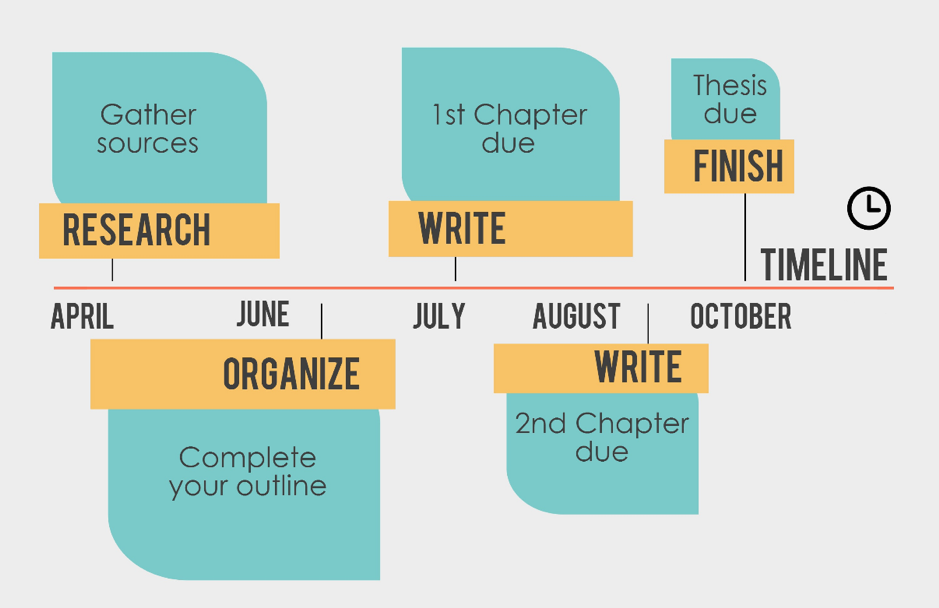
Your Time Properly
When writing your thesis proposal
(or any other writing for that matter), sitting down and planning how you are
going to divide your time is very important. All you have to do is to create a
schedule and stick to it no matter what. Many college students are prone to
procrastination that is why making a schedule is a great help. So make a plan
to include some distraction-free hours during your day where you will do
nothing but write your thesis proposal.
2. Research
What Excites You
As mentioned earlier, you have a
lot riding on the thesis proposal and need to make it as interesting and
compelling as possible. That is why you must ask yourself what research area
excites you about the dissertation topic you have been given. When it comes to
doing any kind of work, motivation is the key. It is not only important for
getting started and finishing the thesis proposal, it is also important for how
much enthusiasm and greatness you inject into the work; researching what excites
you is one way to remain motivated.
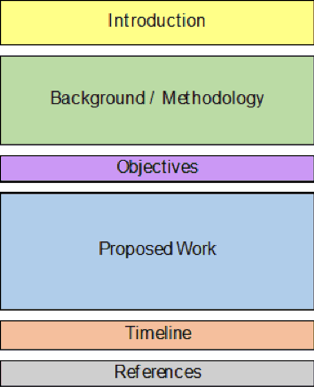
3. Outline Your Thesis Proposal As your professor is reading the thesis proposal, he or she will also be reviewing your research skills. The professor needs to know that you can find and review the necessary literature and include it in your thesis proposal. In order to give the professor what they are looking for, outline your proposal by clearly including all the sections that make up the thesis proposal. Outlining it is also beneficial for you because you will break it into manageable chunks, making the whole project less overwhelming and much easier to write.
4. Know the
Structure
In order to make an effective
outline for your thesis proposal, you also need to know the structure you are
supposed to use. Luckily enough, there is a high chance that your professor
will give you a style guide that will contain the structure. A structure helps
make your paper clear and concise, on top of also making it flow from one
section to another seamlessly.
5. Follow
Instructions
Before you begin writing your
thesis proposal, make sure that you go through the instructions and understand
them 100%. This will help you avoid further headaches down the line and show
your professor that you know what you are doing. If you don’t understand
something about the instructions, bring it up with your professor so that he or
she can clarify it for you. You need to make sure the content of your thesis
proposal matches the instructions as much as possible or it will be torn apart
when the committee reviews it.
6. Keep Your
Audience in Mind
A thesis proposal is usually written in the form of a report, which you will present to people who may or may not be in your field of research. So, it is better to make sure that you avoid jargon and make it as clear and concise as possible. Keeping it simple is the best approach to impress an overwhelming majority of your reviewers.
7. Be
Original
Your thesis proposal needs to be
unique and written from an interesting angle that no one has ever approached it
before. This means you have to get a little creative. Read other thesis
proposals and see the interesting ways in which others have approached their
work and get some inspiration from them. Also, do some research to make sure
that no one has approached the topic the way you plan on doing it – the last
thing you want is to be called up by your professor and being told that you
plagiarized someone’s work.
8. Get Some
Feedback
Of course, it is important for
you to edit and proofread the thesis proposal before showing it to anyone. But
if you want to further refine it or uncover any mistakes that you may have
missed during the initial editing and proofreading phase, give it to a peer or
your professor so that they can review and give you feedback. The more feedback
you get, the better because you will be able to fine-tune it for a diverse
audience when it finally gets reviewed by the committee.
If you haven’t been given a style
guide on how to structure the thesis proposal, the hope is not lost. You can
download any university guides to learn more about structuring it in a way that
will earn you high marks.
Many players weighing new gaming sites end up comparing welcome packages, live dealer lobbies, and withdrawal speeds before signing up, and platforms like Cazeus Online Casino often show up in those side-by-side reviews. A short check of licensing credentials, available payment methods, and the variety of slot providers tends to separate the better regulated brands from the rest of the pack, so it is worth scanning the footer details and the terms page rather than just the promo banner. For anyone interested in trying Cazeus Online Casino, reading recent player feedback and noting the minimum deposit and wagering requirements usually gives a clearer picture than the headline bonus number alone.
Wie je live tafels wilt verkennen zonder gedoe, dan kan een account met snelle verificatie en heldere stortingslimieten helpen; wie liever sport en slots combineert, vindt via stake casino een overzichtelijke Nederlandstalige omgeving die aan alle eisen voldoet.